



This store requires javascript to be enabled for some features to work correctly.


We have calculated the carbon generated from an average return domestic business and economy cabin flight within Australia.


Head to our Projects page for more information.
Agroforestry Project, Senegal
Agriculture is the backbone of Senegal’s economy. In Senegal, the conventional crop intensification model has proven inadequate, jeopardising livelihoods, degrading soils, contributing to biodiversity loss, and aggravating the effects of a changing climate.
By rehabilitating degraded lands, implementing sustainable practices, and fostering community ownership, the program aims to contribute to the long-term richness and sustainability of the Gambia River Watershed.
-
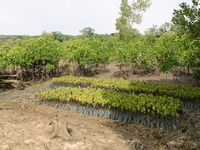
Mangrove Restoration, Kenya
The project site was previously expansive mangrove forests but have since been depleted due to over-harvesting. Communities used to rely on these mangrove estuaries for high-value commercial fish species, like prawns and crabs, as a reliable source of income for the fishing community.
Restoring this area helps to maintain shoreline stability and safeguard communities during severe weather events. The protection and restoration of inland coastal forest habitats targets key drivers of deforestation such as uncontrolled fires and charcoal production.
-
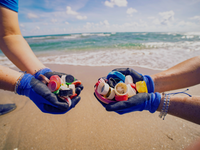
Ocean Plastic and Rubbish Removal, Global
Remove plastic waste and other mad-made debris from the open ocean and environments where they are at high risk of entering the sea; such as rivers as well as vulnerable ecosystems like mangrove forests and coral reefs.
Check out our FAQs page for more detail.
Q: How do you work out the carbon averages for each product?
A: Our Carbon Accountant, Resource Intelligence, did the heavy lifting to calculate the emission data based on industry averages referenced by Climate Active. Each of our carbon bundles have been independently third party verified.
Q: Can you provide proof of planting or ocean plastic removal?
A: Yes. You can always contact We Cool or any of our partners and verify that your contributions, both financial and in person, have been made.
We only work with vetted, third party verified projects. We work with partners on the ground to use technology that monitors the impact.
This includes per unit data that records timestamps and geo-coordinates of where your impact happened! We then monitor it to ensure real environmental impact and survival over time.
Q: Will I be carbon neutral when I buy a We Cool bundle?
A: We use the terminology balance out your environmental impact and reducing you waste footprint, instead of carbon neutral terms.
We do this because we plant trees instead of buying carbon credits. We think planting trees is more relatable than carbon credits, but the result for our planet is the same!
You don't need to overhaul your entire operation overnight - small, practical changes across your business add up to meaningful impact.
Here's where to start:
You don't need to overhaul your entire operation overnight - small, practical changes across your business add up to meaningful impact.
Here's where to start:


We have calculated the carbon generated from an average return domestic business and economy cabin flight within Australia.
Head to our Projects page for more information.
Agroforestry Project, Senegal
Agriculture is the backbone of Senegal’s economy. In Senegal, the conventional crop intensification model has proven inadequate, jeopardising livelihoods, degrading soils, contributing to biodiversity loss, and aggravating the effects of a changing climate.
By rehabilitating degraded lands, implementing sustainable practices, and fostering community ownership, the program aims to contribute to the long-term richness and sustainability of the Gambia River Watershed.
-
Mangrove Restoration, Kenya
The project site was previously expansive mangrove forests but have since been depleted due to over-harvesting. Communities used to rely on these mangrove estuaries for high-value commercial fish species, like prawns and crabs, as a reliable source of income for the fishing community.
Restoring this area helps to maintain shoreline stability and safeguard communities during severe weather events. The protection and restoration of inland coastal forest habitats targets key drivers of deforestation such as uncontrolled fires and charcoal production.
-
Ocean Plastic and Rubbish Removal, Global
Remove plastic waste and other mad-made debris from the open ocean and environments where they are at high risk of entering the sea; such as rivers as well as vulnerable ecosystems like mangrove forests and coral reefs.
Check out our FAQs page for more detail.
Q: How do you work out the carbon averages for each product?
A: Our Carbon Accountant, Resource Intelligence, did the heavy lifting to calculate the emission data based on industry averages referenced by Climate Active. Each of our carbon bundles have been independently third party verified.
Q: Can you provide proof of planting or ocean plastic removal?
A: Yes. You can always contact We Cool or any of our partners and verify that your contributions, both financial and in person, have been made.
We only work with vetted, third party verified projects. We work with partners on the ground to use technology that monitors the impact.
This includes per unit data that records timestamps and geo-coordinates of where your impact happened! We then monitor it to ensure real environmental impact and survival over time.
Q: Will I be carbon neutral when I buy a We Cool bundle?
A: We use the terminology balance out your environmental impact and reducing you waste footprint, instead of carbon neutral terms.
We do this because we plant trees instead of buying carbon credits. We think planting trees is more relatable than carbon credits, but the result for our planet is the same!
You don't need to overhaul your entire operation overnight - small, practical changes across your business add up to meaningful impact.
Here's where to start:
You don't need to overhaul your entire operation overnight - small, practical changes across your business add up to meaningful impact.
Here's where to start:
It was simple and straightforward to work with We Cool. Everyone should do it!!!
Visit our FAQs page for more detail.
Our Carbon Accountant, Resource Intelligence, did the heavy lifting to calculate the emission data based on industry averages referenced by Climate Active. Each of our carbon bundles have been independently third party verified.
Step: 1: Research source data for each of the sub-category activities using Australian Bureau of Statistics (abs.gov.au) and/or other verifiable data sources, e.g., Government departments, industry bodies and published papers, ensuring data is appropriate for Australian populations.
Step 2: Record all source data references and assumptions.
Step 3: Validate the source data by checking alternative sources to ensure that the data used is credible and relevant to the sub-category activity being reported.
Step 4: Assess and select suitable emission factors for the sub-categories activities. Emission factors must be from Australian Government sources or known emission factor databases.
Step 5: Independent Third party verification of emission data.
Trees sequester CO2 over their lifespan; which means they absorb CO2. We Cool plants enough trees to ensure your emissions are sequestered, or balanced out, by the number of trees we plant for each bundle.
Trees sequester CO2 over their lifespan; which means they absorb CO2. We Cool plants enough trees to ensure your emissions are sequestered, or balanced out, by the number of trees we plant for each bundle.
Yes. You can always contact We Cool or any of our partners and verify that your contributions, both financial and in person, have been made.
We only work with vetted, third party verified projects. We work with partners on the ground to use technology that monitors the impact.
This includes per unit data that records timestamps and geo-coordinates of where your impact happened! We then monitor it to ensure real environmental impact and survival over time.
"Nice and easy way to give a gift with purpose! Cute e-Gift Card options too."
"It was a good feeling to be able to contribute to this worthwhile mangrove planting project and know I was giving back a little of what I have used."
"It was simple and straightforward to work with We Cool. Everyone should do it!!!"
Would you like to chat about making the world a better place or request a particular pre-calculated carbon bundle? Maybe you just want to say hi!
We would love to hear from you.